

Preamble – A disclosure
What follows was first generated by AI, following instructions I prompted as part of a research assignment using ChatGPT’s Deep Research feature.
I then acted as editor, adapting for my tone, refining the structure, choosing words I preferred, and checking every source for accuracy and clarity. In many ways, this process mirrors the very topic of the forthcoming article: the adaptation of heritage. Just as we ask how old buildings can be brought into dialogue with the future, without losing their integrity; research and writing itself are also adapting to new tools and methods.
The heritage of writing will soon include the fact that articles, reports, papers and books, were in once drafted by teams of researchers, editorial assistants, and technical writers, all working under the guidance of an editor or lead author. Today, I collaborate with an AI model in that same initial drafting role. The final product rests on my human judgment, voice, and responsibility.
Efficiency and stewardship. Much like adapting a heritage building for net zero requires sensitivity, creativity, and a values-based approach, adapting research practices demands similar care.
So if this article achieves anything, let it be this: a demonstration that adaptation, be it of buildings or of methods, need not mean compromise.
It can mean evolution.
Introduction: Heritage and the Climate Challenge
Heritage buildings and sites – from grand public halls to sacred Indigenous landscapes – are increasingly on the frontline of Australia’s push toward net zero emissions. The built environment contributes roughly a quarter of Australia’s carbon emissions,[1] yet the adage “the greenest building is the one already built” holds true in the climate fight. Reusing and upgrading historic structures leverages their embodied energy and avoids the huge carbon cost of demolition and rebuild. However, adapting non-residential heritage properties (commercial buildings, government-owned sites, and Indigenous heritage places) for sustainability is a complex endeavor. It demands balancing strict conservation values with modern engineering, all under evolving climate policies.
I researched and explored the challenges, risks, and opportunities in retrofitting Australia’s heritage properties for carbon accounting, net zero targets, and improved sustainability, highlighting key regulations, technical hurdles, success stories, Indigenous perspectives, and ways to turn these adaptations into inspiring public narratives.
Policy Landscape: Regulations and Heritage Sustainability
At the national level, Australia’s climate commitments (net zero by 2050) and building efficiency policies are beginning to intersect with heritage conservation frameworks. Building codes and standards impose energy-efficiency requirements on renovations, but they allow flexibility for heritage structures. For example, the National Construction Code is performance-based, meaning heritage projects can use alternative solutions to meet energy targets without compromising historical fabric.[2] Australian Institute of Building Surveyors (building control surveyors in RICS vernacular) have discretion in applying energy regulations to heritage sites, especially for large retrofits where strict compliance might “unacceptably alter” significant features. In practice, many jurisdictions permit exemptions or creative compliance methods for historic buildings – a pattern seen internationally as well.[3] This flexibility acknowledges that one-size-fits-all rules (like mandated window insulation or solar panels placement) may clash with heritage values.
Heritage protection laws add another layer. Changes to National or State heritage-listed properties often require approvals to ensure significance isn’t adversely affected. This can slow or limit sustainability upgrades – a regulatory risk discussed later. Notably, Australia’s key heritage legislation (such as the Environment Protection and Biodiversity Conservation Act for National Heritage places) does not yet explicitly address climate adaptation, focusing more on preventing damage to heritage values. The result is that climate-friendly alterations must be justified under existing heritage criteria, which can be a gray area. The Heritage Council of Victoria has lamented that cultural heritage is “often overlooked in key policies” on climate, missing opportunities and even causing maladaptation. For instance, energy schemes tend to ignore the huge embodied energy in existing buildings – which in Australia’s building stock equals about 10 years of national energy use. Recognising this in policy could tilt incentives toward reuse over replacement. On the positive side, some government initiatives are bridging this gap. The Australian Government’s National Carbon Offset Standard for Buildings and programs like NABERS (National Australian Built Environment Rating System) are beginning to account for operational carbon in all buildings, new and old. Meanwhile, state programs such as NSW’s Accelerating Net Zero Buildings fund aim to help non-residential buildings (including older commercial stock) improve energy performance.[4] While not heritage-specific, such programs can provide grants or technical support that heritage owners may tap into, often via tailored advice. Furthermore, the Climate Active carbon-neutral certification is being pursued by high-profile heritage sites like the Sydney Opera House, signaling that heritage assets can lead by example under existing climate programs.[5] In summary, Australia’s regulatory environment is gradually enabling sustainability in heritage contexts through flexible code compliance, emerging carbon standards, and adaptation strategies – but integration of heritage in climate policy is still in early stages.
Technical and Architectural Challenges in Retrofitting Heritage Buildings
Retrofitting heritage buildings for sustainability is as much an art as a science. These structures were “not originally constructed with modern technologies and practices” in mind,[6] so inserting 21st-century green systems into centuries-old fabric poses unique challenges. Key technical impediments include:
- Architectural Constraints: Historic buildings often have solid masonry walls, single-pane windows, high ceilings, or other period features that perform poorly by today’s energy standards.[7] Yet replacing or altering them may be unacceptable. For example, adding thick insulation or double-glazing might mar a building’s facade or interior details, and mounting solar panels on a heritage roof can be forbidden by heritage guidelines.[8] Designers must find creative solutions like internal insulation that “hide” in cavities, secondary glazing behind existing windows, or putting solar arrays on less visible structures. In one innovative case, an Adelaide tech company repurposed a 150-year-old heritage mansion and avoided altering the roof by installing a solar panel carpark canopy – a set of sleek “solar trees” that power the site without touching the building itself. We dive into this case study, below.
- Integrating Modern Systems: Fitting new HVAC (heating, ventilation, air conditioning), elevators, or plumbing into historic layouts is notoriously difficult. Heritage buildings can be “an obstacle to the installation of new, state-of-the-art services” due to limited space and the desire to preserve original structural elements. Running bulky ductwork or piping may require either visible runs (impacting aesthetics) or invasive alterations (impacting fabric). Conservation experts face tough decisions – for instance, whether to install air conditioning externally (preserving interiors but altering exteriors) or conceal it within attics and basements (risking changes to structure). Advances in technology are helping: compact VRF air conditioners, wireless environmental sensors, and LED lighting can often be added with minimal intrusion. Nonetheless, each retrofit becomes a custom engineering puzzle. A recent study confirmed that “many measures may unacceptably affect heritage values”, limiting the menu of off-the-shelf energy upgrades.[9]
- Structural and Material Limitations: Older buildings may have structural limits that constrain sustainability interventions. Roofs might not support heavy solar PV panels or green roofs without reinforcement. Heritage timber or masonry can be susceptible to moisture, so adding insulation must be done carefully to avoid condensation and decay. There is also the presence of hazardous materials (like asbestos or lead paint) in many historic buildings, complicating work and requiring special handling during energy retrofits. All these factors can drive up costs and complexity, making it technically challenging to achieve deep energy efficiency gains without endangering the building’s integrity.
- Performance Knowledge Gaps: Surprisingly, some heritage buildings have inherent climate-responsive features that modern retrofits can leverage. Prior to air-conditioning, many were designed for passive cooling – thick walls providing thermal mass, operable windows aligned for cross-ventilation, verandas or shutters for shade. Recognising and enhancing these features is crucial. However, data on the real energy performance of historic structures is often lacking, and models built for modern buildings may not apply neatly. This creates a knowledge gap for engineers and makes it harder to predict the impact of interventions. Pilot studies and building monitoring are therefore important to tailor solutions to each site’s quirks.
In short, architectural retrofits in heritage contexts require “contextual innovation” – working within tight preservation parameters to improve efficiency.[10] Success relies on interdisciplinary collaboration between architects, engineers, and heritage consultants to devise solutions that respect aesthetics and authenticity while cutting energy waste. As one researcher noted, it forces a “paradigm shift” from pure preservation toward an approach that fuses old and new in creative ways.
Risks and Constraints: What Could Go Wrong?
Adapting heritage properties for sustainability comes with distinct risks that must be managed:
- Regulatory Risk: Navigating heritage permissions is a major challenge. Proposed works that alter a site’s appearance or fabric can be refused by heritage authorities or trigger lengthy approval delays. There is a risk that sustainability upgrades might violate heritage conditions, leading to legal injunctions or orders to undo the changes. For example, installing visible solar panels in a heritage precinct may require a planning permit; if owners proceed without one, they face fines and orders for removal.[11] Even well-intended projects can run afoul of regulators if not carefully negotiated – causing wasted investment and reputational damage. Mitigation involves early consultation with heritage councils, using heritage architects in the design team, and sometimes accepting lower performance targets to satisfy preservation requirements.
- Financial and Economic Risk: Upgrading historic buildings can be expensive – and indeed “high costs of retrofit projects” rank as the top impediment to net-zero retrofits in one 2024 study. Special materials, skilled craftsmanship, and custom engineering drive costs far above a standard renovation. There’s also the risk of unforeseen conditions: once work begins, hidden structural issues or decay often surface, ballooning the budget. If the business case is weak, owners may abandon projects halfway. Without public or private financial support, many heritage sustainability retrofits are simply not financially feasible. This ties into regulatory risk too – if heritage rules prevent cost-effective solutions, owners might defer action entirely. Thus, securing grants, incentives or proving long-term savings is crucial to manage financial risk.
- Structural and Fabric Risk: There’s an inherent risk of damaging the very heritage values one is trying to preserve. Drilling into 100-year-old brickwork to run cables, or cutting vents into a Victorian-era roof, can cause irreversible harm if done poorly. Heavy new equipment might overload antique structures. Even insulation, if misapplied, can trap moisture and accelerate decay in historic wood or plaster. All retrofitting work must be gentle and reversable where possible, following the principle “do no harm” to significant fabric. A mistake could mean loss of heritage authenticity – or even structural failures (e.g. weakening a foundation for geothermal bores). Careful structural analysis and involvement of conservation specialists help reduce this risk. Still, as one paper noted, “the extent of possible alterations…is restricted because of [historic] significance” – meaning engineers often must work around the building’s limits, not push through them.
- Reputational Risk: Heritage buildings are often beloved by communities. Any adaptation perceived as insensitive can spark public backlash and negative publicity. For instance, if a government retrofitting project on an iconic site is seen as “ruining” its character in the name of sustainability, it can become a lightning rod in the media. Conversely, doing nothing and letting a heritage site waste energy or deteriorate has reputational downsides too, especially for public owners who have net-zero commitments. Striking the right balance is key to avoiding reputational damage. Inclusive consultation (especially with traditional owners for Indigenous sites) and transparent communication about why changes are necessary can help maintain public trust. Importantly, a well-executed sustainable retrofit can enhance reputation – positioning the owner as a forward-thinking steward of heritage.
- Cultural and Social Risk (Indigenous context): When dealing with Indigenous heritage places, there are additional sensitivities. Many such sites have intangible spiritual values and living cultural significance. Introducing modern infrastructure or new uses can risk disrespecting or disrupting cultural practices. The climate crisis itself poses a risk: Indigenous communities have voiced concerns that climate change “affects the ability…to care for Country, practice culture and maintain relationships” with heritage lands.[12] Thus, any adaptation plan that ignores Indigenous voices could compound historical injustices or erode cultural connection. The opportunity, discussed next, is to mitigate this through genuine partnership with Indigenous custodians in adaptation projects.
In summary, retrofitting heritage buildings for sustainability must proceed with caution. It requires astute risk management: aligning with regulators, securing funds, using conservation-minded construction techniques, and engaging stakeholders to turn potential pitfalls into project strengths. As experts advise, a values-based management approach is essential – one that considers all the heritage values at stake (architectural, social, spiritual) when planning climate adaptations.[13]
Funding and Incentive Mechanisms
Transforming an aging courthouse or historic warehouse into a low-carbon showcase often hinges on funding support and smart finance. Fortunately, several mechanisms can help offset the higher costs:
- Government Grants for Heritage Conservation: Traditional heritage grants (like the former “Living Heritage Grants Program” in Victoria) can underwrite restoration costs, and increasingly these can overlap with sustainability outcomes. For example, a grant might fund repairing original windows and adding unobtrusive weather sealing to improve efficiency. However, such programs are limited. Advocates note a need for government incentives specifically targeting adaptive reuse and retrofitting for climate goals. Including climate criteria in heritage grants or reinstating programs focused on reuse would spur more projects.
- Environmental Upgrade Finance: Some Australian cities (Melbourne, Sydney, etc.) offer Environmental Upgrade Agreements (EUAs) – a financing model where building owners borrow money for energy upgrades and repay via council rates. This structure, used in the City of Melbourne’s 1200 Buildings Program, has helped owners retrofit older commercial buildings by providing low-interest, secure loans. Heritage buildings have benefited from EUAs by funding new efficient building services or solar installations that they otherwise couldn’t afford upfront. The 1200 Buildings case studies showed that even 19th-century structures can slash energy use with such financial tools in place.
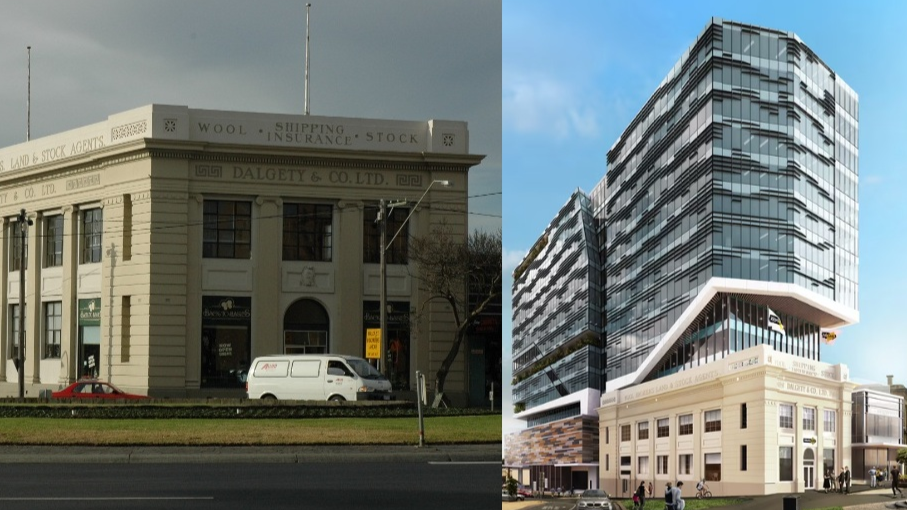
- Clean Energy Finance Corporation (CEFC): Australia’s green investment bank, the Clean Energy Finance Corporation, has actively financed sustainable upgrades of historic properties. In one notable project, CEFC lent $68 million to integrate a heritage façade (the Dalgety amp; Co. building in Geelong, a case study we dive into, below) into a new 14-storey 5.5 Star NABERS rated office tower.[14] The financing ensured the development exceeded standard sustainability benchmarks while preserving the old building as part of the complex. CEFC highlighted this as giving “an historic landmark a new lease on life as a low carbon building.” Such financing sets a precedent – leveraging public funds to de-risk private investment in heritage retrofits for exemplary outcomes.
- Tax Incentives and Rebates: Unlike some countries, Australia currently has limited tax credits for heritage rehabilitation. However, businesses can claim general tax deductions for capital improvements, and accelerated depreciation for certain green equipment. If structured well, a heritage owner could recoup part of the cost of solar panels, high-efficiency HVAC, or battery storage through tax provisions. In addition, rebates from energy retailers or government (for installing efficient appliances, solar feed-in tariffs, etc.) are equally available to heritage sites. Bundling these smaller incentives can improve the return on investment.
- Rating and Certification Benefits: Owners are increasingly pursuing certifications like Green Star – Performance or NABERS Energy ratings for their heritage properties. A strong rating not only validates the sustainability improvements but can unlock financial benefits: higher asset value, lower insurance premiums (in some cases), and ability to attract tenants or grants. For instance, the Sydney Opera House achieving a 6-Star Green Star Performance rating (the highest possible) as a heritage building is not just a prestige marker – it also signals efficient operations, which can reduce operating costs and attract sponsorships. Some government tenants even require minimum NABERS ratings to lease a building, creating a market incentive to retrofit older offices.
- Community and Philanthropic Funding: Given the public-good aspect of heritage, there’s potential to tap philanthropic donors or community financing. Local heritage trusts or “friends of” groups might crowdfund solar panels for a community-owned heritage hall, for example, framing it as both conservation and climate action. In Indigenous communities, funding from Land Councils or ranger programs might support sustainable infrastructure that doubles as cultural infrastructure.
Overall, while funding remains a significant barrier (often the critical impediment), the toolbox of incentives is expanding. Combining heritage grants with climate finance and innovative loans can improve project viability. Government policy could further boost this by reintroducing tax concessions for heritage retrofits (similar to the former Federal heritage rebate scheme) and ensuring that broader decarbonisation funding streams (like energy efficiency rebates) explicitly include heritage projects. Importantly, the existence of successful pilots – where creative funding made a project possible – provides models to replicate.
Innovation and Success Stories: Heritage Leading the Way
Despite the hurdles, many Australian heritage sites have been transformed into sustainability trailblazers, proving that old buildings can learn new tricks. These success stories serve as valuable demonstrations:
Sydney Opera House, NSW – A Carbon-Neutral Icon
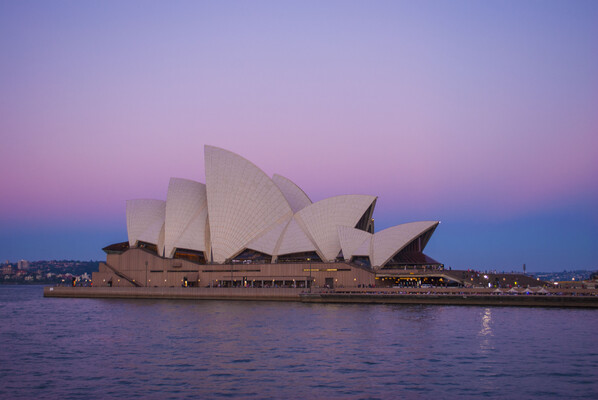
Perhaps the most high-profile example is the Sydney Opera House, a World Heritage-listed performing arts venue from 1973 that has become a global leader in sustainable operations. Through years of upgrades and management tweaks, the Opera House cut emissions by 26%, achieved Climate Active carbon-neutral certification in 2018, and now runs on 100% renewable electricity.[15] In 2022 it earned a 6-Star Green Star Performance rating – the only heritage building with its original function to reach that level. Upgrades included installing efficient chillers and a seawater cooling system, LED lighting throughout, smart building controls, and an on-site seawater heat exchange that leverages Sydney Harbour for cooling. Crucially, all this was done without altering the building’s famed appearance. The Opera House’s sustainability team also implemented rigorous carbon accounting, offsetting remaining emissions and tying every initiative back to the site’s values. UNESCO and International Council on Monuments and Sites (ICOMOS) have pointed to this case as proof that heritage sites can be platforms for climate action, using their visibility to educate and inspire. The Opera House openly shares its sustainability journey, framing it as “adding a new chapter” to the building’s legacy rather than a threat to its heritage. Sydney Opera House – a UNESCO World Heritage site – has become a sustainability exemplar, achieving carbon-neutral certification and a 6-Star Green Star rating through energy efficiency and innovation. Its success demonstrates that even iconic heritage buildings can reach top-tier sustainability benchmarks while preserving their cultural significance.
1 Malop Street (Dalgety Building), Geelong VIC – Marrying Old and New
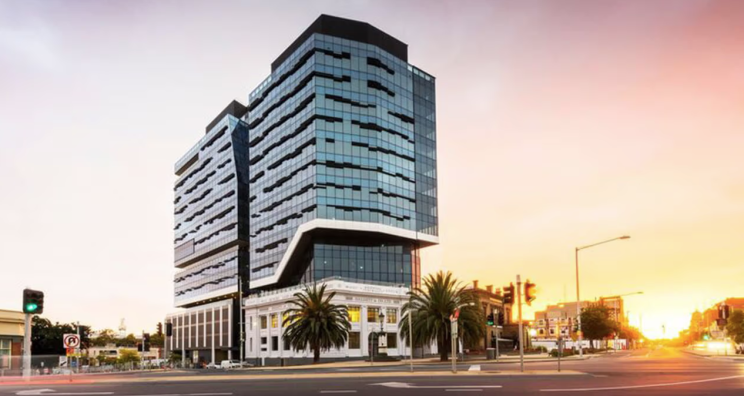
In regional Victoria, an innovative development integrated a heritage-listed 1920s wool warehouse facade into a modern 14-story office tower built to high green standards. The project, completed in 2018 as WorkSafe Victoria’s headquarters, preserved the historic Dalgety amp; Co. façade and parts of the structure, while the new addition behind it achieved a 5.5 Star NABERS Energy rating and 6-Star Green Star design. This blend of adaptive reuse and new construction was financed with help from the CEFC. It showcases adaptive reuse at scale: rather than demolish the heritage building, the developers saved it and still delivered a state-of-the-art low-energy workplace. The sustainable features (high-performance glazing, efficient HVAC, solar panels, etc.) were carefully incorporated to respect the old facade. The result is a landmark where heritage architecture and contemporary sustainability co-exist, boosting the city’s development while keeping its character. Such projects illustrate the “new lease on life” that sustainability can offer heritage – in this case, yielding economic and environmental wins simultaneously.
“Base64” Tech Hub, Adelaide SA – Heritage Mansion with Solar Trees
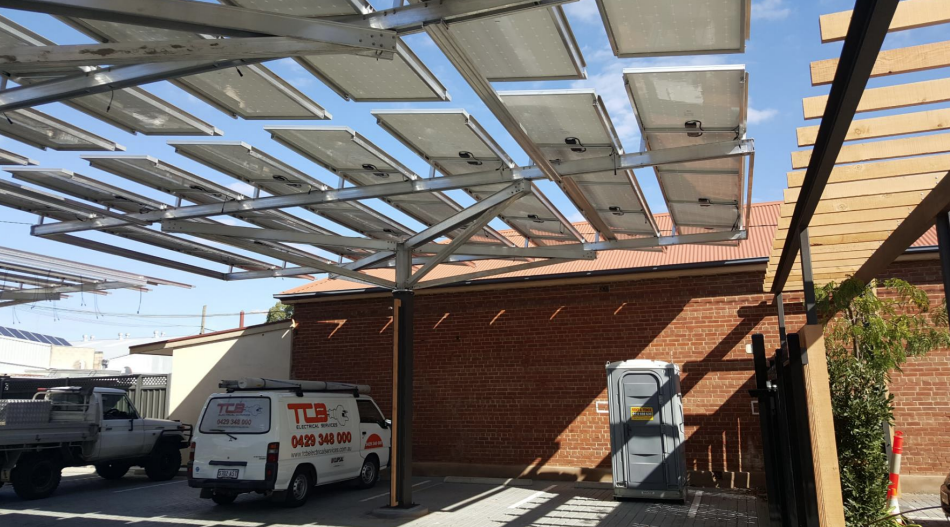
A Victorian-era mansion in Adelaide, once languishing, has been reborn as “Base64”, a tech co-working hub powered largely by solar energy. The challenge was modernising this 150-year-old building (high ceilings, ornate finishes) into energy-efficient offices without altering its protected fabric. The owners accomplished this by installing a 70 kW solar array on an adjacent car park structure in the form of four “solar trees” – sculptural steel canopies that hold the panels aloft.[16] This clever workaround preserved the mansion’s appearance (no panels on the roof) yet provides clean power, stored in on-site zinc-bromine flow batteries for nighttime use. Inside, the retrofit introduced LED lighting and modern HVAC in a reversible way, and an energy management system optimises consumption. Base64 demonstrates how innovative design can resolve the tension between old architecture and new tech. The solar trees not only supply renewable energy but also enhance the site with a futuristic aesthetic – a talking point that bridges heritage and innovation. The building now operates with minimal grid energy, proving that even a colonial mansion can inch towards off-grid sustainability with ingenuity.
Regional and Community Heritage Projects
Smaller-scale successes are found across Australia. For example, some rural town councils have retrofitted heritage-listed town halls and railway stations with efficient air conditioning and solar panels (sensitively placed), cutting costs and modeling sustainability to the community. In Queensland, an 1880s courthouse converted to a community center achieved a 4-Star NABERS rating after installing under-floor insulation and a solar battery system, all while preserving its historic courtroom interior. These pilots often rely on local champions and grants, but their impact is outsized: they become local showcases where people can see climate action working in familiar, beloved buildings. Each success story yields lessons. A common thread is collaboration – owners, government, engineers, and heritage experts partnering early to align goals. Also evident is the importance of setting ambitious targets (like carbon neutrality or Green Star ratings) to drive innovation. As one consultant put it, tackling a heritage retrofit with a net-zero mindset forces stakeholders to “bring both cutting-edge and established technologies” and overcome impediments in creative ways. These projects also reinforce that heritage and sustainability goals can be mutually reinforcing: making a historic place useful and efficient ensures its ongoing maintenance and relevance, which in turn safeguards its future. In many cases, the sustainable adaptation has enhanced the site’s value and longevity, securing its place for future generations.
Indigenous Heritage: Challenges and Opportunities
Adapting Indigenous heritage sites for sustainability involves a unique set of considerations, rooted in respect, co-stewardship, and cultural continuity. Unlike built structures, many Indigenous heritage places are landscapes, songlines, rock art sites, or sacred natural features. Achieving “net zero” in these contexts is less about retrofitting buildings and more about preserving cultural land management practices and supporting Indigenous communities in climate action.
Climate Threats to Indigenous Heritage: First, it’s important to note that climate change poses a direct risk to many Indigenous heritage values. Increased wildfires, erosion, and extreme weather are “ravaging our precious Indigenous heritage” such as rock art sites and even exposing ancestral remains in some areas.[17] Moreover, changes in seasonal patterns affect bush tucker and medicinal plant availability, impacting living cultural practices. Thus, adaptation is urgent not just for carbon goals but to protect these heritage sites from climate impacts. Efforts like documenting and stabilising rock art, relocating important cultural materials to safer areas, and integrating Indigenous knowledge of climate resilience are ongoing. For example, in Kakadu and other north Australian parks, Indigenous ranger groups are combining traditional burning practices with scientific monitoring to reduce wildfire intensity (which helps carbon emissions) and safeguard cultural landscapes.
Traditional Knowledge and Sustainability: Indigenous Australians have managed land sustainably for millennia, and this knowledge is now recognised as a key asset in climate adaptation. Practices such as controlled burning (cool-season “fire-stick farming”), water conservation, and seasonal migration are inherently adaptive. A project by ICCROM called “Net Zero: Heritage for Climate Action” specifically aims to harness Indigenous and traditional knowledge in fighting climate change.[18] In Australia, incorporating Indigenous land management can enhance carbon sequestration (e.g. savanna burning projects that generate carbon credits) while maintaining heritage. These projects not only cut emissions but also create jobs for Indigenous communities as custodians – a synergy of cultural heritage and sustainability. The First Nations Clean Energy Strategy 2024–2030 also recognises that much renewable infrastructure will be on Indigenous land and calls for community consent and benefit sharing.[19] This points to opportunities for Indigenous heritage: renewable energy projects (like solar farms or wind) can be designed to respect cultural sites and even power Indigenous communities, contributing to both net zero and energy sovereignty.[20]
Cultural Centers and Built Heritage: There are also built heritage sites of Indigenous significance – from mission-era buildings to keeping places and cultural centers. Adapting these for sustainability must be done in a culturally sensitive way. One opportunity is to use vernacular design and materials that resonate with Indigenous traditions. For example, the planned Ngurra (National Aboriginal and Torres Strait Islander Cultural Centre in Canberra) incorporates sustainability features inspired by nature and Indigenous concepts of Country.[21] On a smaller scale, the Baaka Cultural Centre in Wilcannia (NSW) is being constructed with rammed earth, reflecting traditional earth building while achieving modern energy efficiency.[22] When retrofitting older buildings that are part of Indigenous heritage (such as former mission buildings now used by Indigenous communities), involving Elders in design decisions is crucial. This ensures that any solar panels, rainwater tanks, or new appliances support the community’s needs and do not inadvertently disrespect the site’s story.
Consultation and Co-Management: A consistent challenge has been the exclusion of Indigenous voices in heritage and environmental decision-making. To turn this into an opportunity, many adaptation projects are shifting to a co-management model. Indigenous ranger groups co-manage national parks and heritage areas, bringing in cultural burning and feral species control that improve ecological resilience (with carbon benefits). Engaging Traditional Owners when planning adaptations (for instance, relocating a community building to higher ground or installing solar power for a remote art center) leads to more appropriate solutions and community buy-in. It can also surface innovative ideas – such as using storytelling and art (integral to Indigenous heritage) to communicate climate messages.
Risks and Mitigations: One risk is the potential commodification of Indigenous knowledge – using it to meet climate targets without proper attribution or benefit to communities. Any projects leveraging Indigenous heritage for carbon outcomes should ensure free, prior, informed consent and fair compensation. Another risk is that rapid shifts (like sudden introduction of new technologies) could disrupt cultural practices. Mitigation lies in gradual, community-led implementation. For example, introducing solar refrigeration in an Indigenous ranger station should go hand-in-hand with training and aligning with community values (like enabling better preservation of bush foods or medicines). In essence, Indigenous heritage offers profound lessons in sustainability – focusing on long-term stewardship and harmony with nature. By valuing Indigenous perspectives in adapting to climate change, Australia can not only protect these irreplaceable cultural assets but also enrich the national approach to sustainability. It transforms the narrative from one of vulnerability to one of leadership: First Nations peoples as partners and leaders in guiding Australia to a net zero, climate-resilient future. As one NSW initiative states, listening to Aboriginal people who have “lived through climate change before” can teach us how to live through it again – reminding us that heritage is a wellspring of knowledge for modern challenges.
Communication and Climate Leadership Opportunities
Each adapted heritage property tells a story – and these stories can be powerful tools for public communication, education, and climate leadership. Rather than being dry technical projects, sustainable heritage adaptations provide compelling narratives that resonate with a wide audience. Here are ways these projects can be leveraged in talks or presentations:
- “The Greenest Building” Narrative: Emphasise the idea that preserving and retrofitting heritage is a form of climate action in itself. The fact that reusing an old building often avoids more carbon than a new green building would use is a striking point. A speaker might say, “We saved a 100-year-old post office from demolition – and in doing so, saved the equivalent of ten years’ energy for the whole country by not wasting its embodied carbon.” This reframes heritage conservation as forward-looking, not backward-looking. It challenges the misconception that old buildings are an environmental burden, busting the myth with real data and examples.
- Past Meets Future – Innovation Framed in History: Adaptation projects can be presented as fascinating juxtapositions of old and new. For instance, the image of solar panels on a colonial-era building or a Tesla battery inside a 19th-century factory grabs attention. One can highlight innovations like the “solar trees” at Base64 or the Opera House’s seawater cooling as modern solutions inspired by or adapted to historic contexts. It’s compelling to frame it as “innovation with soul”: we aren’t just deploying tech in a vacuum, but in dialogue with history. Storytelling can include anecdotes of engineers working around antique architecture – perhaps the discovery of original design features that assisted the sustainability effort (e.g. uncovering old vents that enabled natural airflow once more). This humanises the technical challenges and celebrates ingenuity.
- Heritage as a Climate Educator: Heritage sites often have high public visitation and emotional appeal – making them ideal demonstration sites for sustainability. In a talk, one could cite how the Sydney Opera House uses its platform to promote climate awareness, aligning with UNESCO’s call that World Heritage sites serve as “platforms…linking policy to practice and fostering understanding of climate change.” When people see solar panels on a museum roof or learn that their favorite historic library is now carbon-neutral, it sends a powerful message that climate action is universal. A presenter could suggest tours or interpretive signage that explain the retrofit features, turning visitors into learners. The narrative becomes: “If we can green this old heritage landmark, imagine what we can do with your schools, your homes…”, inspiring broader action.
- Leadership by Example: Governments and institutions that own heritage properties can showcase these projects to lead by example. Many arts and cultural institutions in heritage buildings are doing just that, and studies show they are “uniquely positioned to effect change” through their influence. A compelling framing is the idea of climate leadership as the new legacy. For example, a city council might frame the greening of its historic town hall as leaving a legacy for the next century, akin to how our predecessors left the building itself. Highlighting leaders (public or private) who championed these adaptations – and the risks they took – can make the narrative more personal and motivational.
- Indigenous Narratives and Two-Way Learning: Incorporating Indigenous perspectives adds depth and moral weight to the story. One can share how Indigenous rangers are applying ancient practices to reduce wildfire emissions, or how a cultural center’s design was guided by First Nations teachings about living lightly on the land. This introduces a narrative of reconnection: modern society learning from traditional custodians about sustainability. It flips the script from seeing Indigenous heritage as needing “saving” from climate change, to seeing it as a guide for saving us. For a presentation, quotes from Indigenous elders about caring for Country or anecdotes of community-led solar projects bring authenticity and hope.
- “Every Place Has a Climate Story”: As ICOMOS has observed, every heritage place can tell a climate story. A church might speak to the value of continuity and stewardship, a factory-turned-art-center might symbolise transformation, an Indigenous site might embody resilience. Framing adaptations in narrative form – e.g. “This old factory once powered the industrial age on coal; today it’s powering the innovation age on solar” – makes the technical facts memorable. Compelling storytelling could involve the history of the site, the challenges overcome, and the outcomes achieved (energy saved, emissions cut, community benefits). Essentially, the heritage adaptation becomes a microcosm of the broader climate transition, made tangible and relatable.
Adapting non-residential heritage properties for sustainability is not just a technical exercise or compliance task. It’s an opportunity to unite past and future in service of the present. By highlighting these projects’ narratives, we can engage hearts and minds. Heritage sites that achieve net zero or showcase carbon accounting provide hopeful examples that climate action and cultural preservation can go hand in hand. They serve as living laboratories and storytelling platforms, proving that our path to a sustainable future can honor our heritage rather than cast it aside. As one international charter put it, “every place has a climate change story, and using heritage sites to communicate these stories…is both an opportunity and a responsibility”
Embracing that responsibility could inspire others to follow.
CJLM