
Part 1 titled “The Building Detective” precedes this article, introducing ODEC which is applied below. It can be read beforehand, here.
Here’s Part 2.
After midnight on Wednesday 14 June 2017, in flat 16 on the fourth floor of a twenty-four story residential tower, an electrical fault in a fridge-freezer began a fire. Behailu Kebede was awakened by an unfamiliar beeping sound. He got up to investigate, opening the door to his kitchen to find it filled with thick white smoke. He rushed to his living room, grabbed his mobile and at 12:54am called emergency services. By 8:07am the last person was evacuated from the tower. However, not before it was entirely engulfed by flame, killing 72 people and becoming the worst UK residential fire since World War II.
The fire at Grenfell Tower triggered a public inquiry which commenced May 2018, the purpose of which was to examine the circumstances leading up to and surrounding the fire. The enquiry was divided into phases. Phase 1 established the facts, and phase 2 examined the design, construction and alterations of the tower, it’s management, and fire safety. Perhaps better put, the ‘how did it happen?’, and then the ‘why did it happen?’. The aim of the inquiry was to identify what needs to be done to prevent a similar disaster from happening again. Importantly, the inquiry was not tasked with identifying if anyone is innocent or guilty, making it separate to a criminal investigation seeking to convict for a range of offences, including corporate manslaughter, fraud, and health and safety offences. Criminal trials may not even begin before 2025.
In November 2022 the inquiry closed after 4 years, and at 31 March 2023 cost a reported $170 million [1] (and rising) to the UK taxpayer, with the final report due late 2023/early 2024 and expected to identify failings and help determine accountability. As Ahmed Chellat, bereaved relative of Grenfell victims emotionally noted, “72 people were murdered, and who’s taking responsibility?”
6 years on we still don’t have an answer.
Chair of the inquiry, Sir Martin Moore-Bick, relied on a team of over 40 lawyers to act as his detectives, led by the ferociously inquisitive Richard Millet KC. The cause of the fire is not exactly a mystery, but the specifics which created the circumstances under which it unfolded began as ambiguous and far reaching. As it normally is with catastrophes there is not a single point of failure; catastrophes are typically caused by multiple points of failure. A series of events coming together in such a way that when it strikes it is unstoppable and devastating. Sometimes this is referred to systemic failure, however, that definition refers to multiple failures in a single system whereas various systems, some possibly operating completely independent of one another, possibly with seeds sown as long as 50 years ago, contributed to the Grenfell Tower fire. So many systems and their scale, in fact, was reflected by the inquiry disclosing over 378,000 documents and receiving 1,500 witness statements. [2] How did Mr. Millet and his legal team set about identifying each failing for such a catastrophic event? To adapt a saying by the theologian Desmond Tutu; In the same way you eat an elephant; one bite at a time.
Behailu Kebede wasn’t sure if his kitchen window was open that night, but like many surviving residents said in their witness statements, during summer windows were typically kept open all of the time. Whether it was or wasn’t, it’s clear the fire “jumped” from the kitchen, through an opening, and to the external cladding of the tower. Less than a year before the fire, the tower was refurbished. This included the installation of an external building cladding made from aluminium sandwich panels; two aluminium sheets, containing a polyethylene (PE) core. Polyethylene is the polymer holding the two aluminium sheets together. It so happens that polyethylene is as flammable as petrol. When the fire jumped out of Behailu’s flat window, it really didn’t take much to set the entire building on fire, overwhelming its occupants, and outpacing the London Fire Brigade (LBF). An architectural “crown”, a purely aesthetic feature retrofitted to the top of the tower to make it look prettier, which was covered in with the stuff, eventually ignited, spreading the fire across and then downward to the rest of the tower. There are a great number of systems, steps, initiatives, protocols, regulations, management practices, policies, statutory requirements, legal obligations that exist to prevent a fire like this from ever being allowed to occur. Then how was it that it did occur, even after various high profile fires occurring in the decade leading up to Grenfell? Lakanal House in 2009, where a faulty TV caused a fire in a 12 storey residential building, which was allowed to spread because of unsafe refurbishment works; Shepherd’s Court in 2016 where a faulty tumble drier caused a fire in a 20 storey residential building, which cladding contributed to the vertical spread of the fire, affecting several floors above; Lacrosse Apartments in 2014, a 23 storey residential building in Melbourne in which cladding contributed to the vertical spread of fire; and Address Downtown, Dubai, in 2015 an electrical short circuit caused a fire which spread vertically across it’s cladding (even though it was 2013 when the UAE revised its building safety code to require that cladding on all new buildings over 15 meters tall be “fire-resistant”). There were other fires, of course, however, these in particular were high profile, included media coverage and to make the point, difficult to ignore.
As the inquiry progressed, one by one, each point of failure at Grenfell Tower revealed themselves. Whilst the aluminium composite panels (ACP*) or affected cladding may receive a lot of focus due to its dramatic infamy of being highly combustible, it would be careless to consider it the primary and sole cause of what happened. Here’s just a sample of the observations and deductions:
(*referred to throughout the inquiry as ACM: aluminium composite material. However, the acronym ACM has long been used to mean asbestos containing materials, so we’ll refer to the cladding as ACP here).
- There was national guidance that determined the building’s evacuation procedure which in this case was to “stay put”. Typically, buildings are designed to be compartmentalised against the spread of fire, and for a tall residential tower the default safety protocol is to remain in your dwelling since any outbreak is expected to be limited to one compartment for it to be extinguished by the attending firefighters. This being the status quo for protection against fire, firefighters were not trained in the partial or full evacuation of a high rise residential building. Ultimately, existing procedures inhibited a decision to fully evacuate, costing lives. The stay put policy was predicated on the assumption that occupants can stay safe in their apartment from a fire contained within a single compartment somewhere else in the building without being affected by flames, heat or smoke.
- Compartmentation failed. It’s an important layer of protection gives robustness to the stay put policy, that no other layer of protection can provide. Any breach of the compartmentation makes evacuation the preferred option. Not only did the fire “jump” out of a window and find fuel to escape compartmentation and continue its path of travel, it was also revealed that many of the doors replaced during the refurbishment did not meet fire safety standards. An adequately performing fire door is designed to resist a fire and stop its spread for at least 30 minutes. These doors are referred to as FR30 or FR60, as in, a door having a fire rating of 30 or 60 minutes. Furthermore, compartmentalisation relies on penetrations being “fire stopped”. Penetrations are holes made in walls, ceilings and floors to reticulate services like electricity cabling, plumbing and gas lines. Fire stopping is the method of closing any holes and gaps with a suitable fire retardant material, like expanding flame retardant foam or fire pillows. The inquiry found the building had inadequate fire stopping throughout.
- uPVC window frames, a robust material that’s difficult to burn, loses its mechanical strength at low temperatures, melting between 75 and 105 degrees and behaving like gum, which is expected to have happened between 5 and 11 minutes after the fire started. Windows failed, exposing combustible materials beneath it. Expert witness Professor José Torero did not consider the detail of which material igniting first to be important, but rather the principle that any small fire near the window would have been able to ignite any of these materials, putting into motion the events of the night. [3]
- There was an issue with the building’s smoke ventilation system, which is supposed to ventilate smoke in the event of a fire, especially away from the fire escape stairwell. Inhaling smoke is the primary cause of death during a fire, and the cause for the majority of resident’s deaths at Grenfell, be it because they attempted to escape through toxic smoke, or that they followed the ‘stay put’ advice and the smoke had reached them before the late order to evacuate was made (or that the order to get out was not received at all as there was no communication system to rely information to residents).
- The width of the single fire escape stairwell was narrow, as testified by firefighters wearing breathing apparatus (BA) kit, which includes a tank worn on their back. The stairwell was so tight that it did not allow two firefighters wearing BA kit to quickly pass each other, relying on backing themselves into a corner to let another pass. Nor did the stairwell width help firefighters carry casualties down stairs, whose feet and legs kept getting stuck in the stair railing. One testimony described how a casualty lying lifeless on the stairs created a trip hazard, worsened by the stairs being filled with thick toxic smoke reducing all visibility. The firefighter attempted to move her for the safety of everyone else, but couldn’t as they found her leg to be caught and twisted in the rail. [4]
- The cladding had already accelerated the fire spread, but to add to firefighters woes, blue coloured flame was observed to areas on the tower, suggesting that gas lines had been compromised, now contributing to the fire. The local gas authority had already been contacted to cut the main gas line to the building, but all too late.
- Building plans weren’t made available, there was no “premises information box”, and plans couldn’t be immediately obtained from the local authority. Floor numbers were not indicated at all within stairwells, in some limited cases they had be drawn on by hand. Making it overall difficult to navigate the building.
- The dry riser outlet, an empty water pipe which runs up the inside of the building, was located at the furthest point away from the ground floor lobby door. That meant that any lift lobby that was compromised by fire, firefighters couldn’t connect their hose to the dry riser unless that fire was put out, which would be time consuming. If crews connect hose to too many floors, the water pressure drops making it unusable. They tried to remedy this by running additional hoses up the only staircase, from a fire engine parked outside. Crews were getting soaked with water as they travelled up the stairs, then entering a fire compartment and getting “boiled”. At one stage falling debris cut the hose supply outside.
- Emergency lighting failed, or rather, where there was lighting, the thickness and colour of the smoke rendered them useless, forcing firefighters and casualties to “feel” their way to escape.
- The firefighters radios failed once they had ascended the building, losing contact with coordination crews on the ground (this is also something that occurred to firefighters entering the World Trade Centre in 2001, with American fire and building codes developed by 2009 requiring coverages to be supported by installing radio repeater technology. [5]) Amid the rapidly changing, unprecedented situation, firefighters resorted to passing handwritten notes to each other regarding intel received from fire survival guidance calls (or FSGs; the calls received by 999, the UK’s emergency services phone number, from residents trapped by fire, heat or smoke).
- There was no sprinklers in the tower, which up to that point were not a requirement in UK residential tower buildings.
- In the sum experience of firefighters, some with 20+ years tenure, individuals had experienced receiving up to just two FSGs for a single incident. The 999 operations centre were overwhelmed with multiple calls, under resourced to efficiently filter FSGs to the fireground. Calls began to be diverted to operation centres in Manchester and Kent, as many as 30 at once. Most operators had perhaps experienced a single FSG call in their career. The night of the fire produced over 100 FSG calls. Information was not able to be relayed effectively to the fireground, which missed rescue opportunities. The inquiry was able to demonstrate how this specific issue resulted in the loss of a family of five people in one apartment.
- During the design of the refurbishment, a value engineering exercise, an exercise in identifying opportunities to save money through substituting materials or making minor amendments to the design, saw the replacement of the propose non-combustible cladding (zinc) with the combustible material that was eventually installed (PE). Expert witness, Professor Luke Bisby, said the cladding failed to meet building regulation requirements, which states that external walls to buildings should “adequately resist the spread of fire”. [6]
- Materials manufacturers of the insulation and the cladding panels, all engaged in a culture of misleading marketing and cut throat sales tactics at the expense of acting ethically and morally with zero regard to the health and safety implications of their products. Emails showed they knew what the consequences could be and continued, since those further down the supply chain were expected to take all responsibility. Passing the buck onto those specifying and purchasing their products it is one thing, but deliberately falsifying test reports is another. Apparently enabled by the lack of oversight of the once esteemed British Research Establishment (BRE), and generally looking for ways around testing to make their combustible products widely adopted.
- The inquiry even went so far as to question how, if at all, institutional, unconscious or subconscious racism played its part in contributing to the conditions that led to the disaster.
The highest ranking officer in attendance that night, LBF Commissioner, Dany Cotton, had previously been the Director of Safety and Assurance at the LBF. [7] Such a role demands an expertise in assessing risk. Part of undertaking a risk assessment is essentially dreaming up likely and unlikely hazardous occurrences, then documenting and putting in place plans to downgrade or completely eliminate those risks. On Grenfell she said, “The whole of the system of that night, of what happened to that building would have been deemed to have been a completely unrealistic scenario that would never happen.”
This was the basis of her argument that firefighters would have never have received training on how to deal with something like Grenfell, dismissing it as unrealistic, “in the same manner I wouldn’t develop a training package for a space shuttle to land on the Shard, […] we wouldn’t develop training or a response for something that simply shouldn’t happen.” [8]
But it did happen. I make this point, not to examine whether LBF missed the signs that should have signaled to them to consider training for some kind of unrealistic, worst case scenario (the inquiry found plenty of signs) but to serve as a stark reminder to everyone: no matter how many deductions or scenarios you’ve dreamed of, however unlikely they may be, you must remain open to the possibility that you have not thought of everything and devise backstops. Known unknowns refer to “risks you are aware of, such as cancelled flights,” whereas unknown unknowns are risks that come from situations that are so unexpected that they would not be considered. Chris Voss says in Never Split the Difference, “To uncover these unknowns, we must interrogate our world, must put out a call, and intensely listen to the response. Ask lots of questions.” [9]
Information heard by the inquiry, certainly to the ears of the bereaved and survivors, was technical and complicated, but necessary. They are the building blocks that help everyone understand what came next, but to the bereaved and survivors it is not surprising that the level of detail would have felt overwhelming at times. Ultimately, they want to know why their loved ones died. The inquiry uncovered so many reasons. Of course, one of those reasons is something caused a fire to start in the first place. For something that starts so small and becomes destructive beyond all recognition, a forensic level of problem solving is required. ODEC is applied in layers and layers within the Grenfell inquiry, but most of all we can see how carefully it is applied to confirm Behailu’s Kebede’s declaration that it was indeed a faulty fridge-freezer that started the fire.
Expert witness, Duncan Glover, a specialist in investigating electrical fires, delivered his evidence to the inquiry. [10]
Observations
- Behailu saw light coloured smoke coming from the general area of the fridge freezer next to the kitchen window, rising up from the floor coming towards him
- Photographs and video of the fire that Behailu had taken, and photos taken by investigators afterwards, show burn patterns which can be interpreted by experts
- The only place firefighters found evidence of burning was in Behailu’s kitchen
- Following the fire, on inspection of the power switch board in Behailu’s flat, it was evident that circuit 7 had turned off automatically (“tripped”), and would have had to do so before Behailu switched off the mains power as he left
- The circuit breaker is designed to detect a short circuit
- A bread maker used in traditional Ethiopian cooking was discovered in the flat
- Short circuits with enough current can cause arcing, where electricity travels through air
- 27 days after the fire, a piece of wire with 24 strands, exhibited arc damage, and was found in one of the bedrooms
- The flat was flood damaged from firefighting media
- There is a history of two previous fires where the same model of fridge-freezer was linked
Deductions
- The refurbishment was a continued source of contention between residents and the tenant management organisation (TMO). It’s possible that this is a motive for the fire to be started deliberately
- Behailu may have been cooking using the cooker, starting the fire from non-electrical means using cooking oil. It may have been started by his bread maker.
- If combustible material is in close proximity to where ever there is arcing (arc damage is when a current is so high that electricity passes through the air to the closest surface, creating a distinctive black stain as it discharges), it’s possible this can occur before the circuit detects the issue and automatically switches off
- Photographs and video showing the pattern of damage usually leads back to the area of worst damage. As a general rule, the fire started where there is an area of most damage, ruling out the majority and focusing on a small area. The imagery showed this small area to be the fridge-freezer, deducing the fridge-freezer caused the fire
- In fighting the fire, the flats were inundated with water. It’s possible that the arc damaged wire found in the bedroom floated there and belongs to the faulty appliance which started the fire, therefore identifying and confirming the cause of the start of the fire
- The manufacturer of the fridge-freezer, proposed that a lit cigarette was thrown through the window of the fourth floor flat was the cause of the fire
Elimination
- Sniffer dogs trained to detect hydrocarbons (a compound found in various fossil fuels) did not discover anything to indicate the fire was started deliberately
- The fluorescent ceiling light in the kitchen and it’s wiring did not exhibit any arc damage, or “evidence of abnormal electrical activity”
- The switches for the 4 cooker hobs were all found in the off position, giving enough confidence that the cooker was not in use at the time the fire started. The cooker, which only exhibited superficial damage, was connected to a different circuit to the one which tripped, eliminating the cooker as the cause
- The bread maker’s power supply cord was found to be intact, including the plug and fuse, concluding with enough confidence that it was not connected at the time the fire started
- All appliances in the kitchen connected to circuit 7 were examined to identify which the arc damaged wire might come from. The extractor fan was on circuit 7. Upon inspection, the fuse for the fan had not blown. In his position as expert witness, Mr. Glover confirmed a 3 amp fuse will always blow more quickly than a 32 amp fuse, therefore eliminating the extractor fan as the cause
- An arc damaged wire was found inside the stand alone freezer (separate to the aforementioned fridge-freezer). In Behailu’s witness statement, he notes that it stopped working 9 years ago and that a fridge technician confirmed it’s fuse had blown. For this reason it had remained unplugged since then, therefore concluding the damage to this stand alone freezer occurred well before the night of the fire
- The large fridge-freezer was connected to circuit 7, and it’s wiring within the appliance’s relay compartment, matched that of the arc damaged wire found in the bedroom. A CT scan found inadequate crimping of these wires
- Evidence provided by a further expert witness, Professor Naimh Nic Dade, spoke to burn patterns observed to the fridge-freezer, showing how the whole appliance caught fire on the night
- Sir Martin determined that the fridge-freezer manufacturer’s theory of a cigarette being thrown into the fourth floor window was not based on any observations or evidence provided to the inquiry, dismissing it as “fanciful”
Conclusion
We’ve seen time and time again that it is in fact difficult to reach a nice, neat, wrapped-up conclusion. For this reason, it is important to be clear. Mr. Glover made this caveat at the inquiry, “nothing is 100% certain. Based on all my training, experience investigating electrical fires, my conclusions are to a reasonable degree of engineering certainty. Most probable”. Professor Nic Dade also noted that, whilst she concluded the cause of the fire was electrical in origin, which components remain, in her view, undetermined. [11]
Having considered all the possibilities, investigating each through a process of closer examination, going so far as augmenting smell using dogs and augmenting sight using medical scanning technology, it was with a high degree of probability that Mr. Glover spoke his conclusion into the inquiry’s evidence: Poorly crimped wires within the fridge freezer are likely to have caused overheating, getting worse over time of being unaddressed, igniting the wire’s PVC sheaths (which ignites at around 90 degrees), starting a small fire inside the fridge-freezer’s relay compartment. Unsheathed wires which should not have touched came into contact with each other creating a short circuit, arcing, tripping circuit breaker 7. However the breaker tripping was too late. The fire had already started.
Let’s not forget, Mr. Torero noting the principle that any small fire near a window at Grenfell Tower would have put into motion the events of the night. For anyone who loses a loved one, we naturally want to know how they died. We know that inhaling asphyxiating smoke caused most people to die at Grenfell. Obviously, this is not a good answer as it is not the whole story. A deleterious material like ACP allowing rapid fire spread, is how they died. The faulty fridge-freezer that started the fire is how they died. Every decision (or inaction) that led to the woeful refurbishment of the tower is how they died. What if the field of observational view was expanded even further? In Show Me the Bodies, Peter Apps goes as far to suggest that post-war government policy in the 1960’s, is how they died. He argues that policy decisions first evidenced by the 1968 collapse of an east London tower block, Ronan Point, contain the seeds of attitudes and behaviors that continue to fester up to present day. [12]
For the uninitiated curious about the machinations of the construction industry, one could do worse than listening to the Grenfell Inquiry Podcast produced by BBC. It is an examination of almost every moving part of the industry, cutting open and looking directly into its poisoned heart. I have heavily relied upon it to write this case study. The podcast covered the inquiry for every day it sat, clearly breaking down and communicating technical language and concepts. This is not casual listening, however. At times it’s heartbreaking. That said, I can’t understate enough that I believe every industry professional should get to know the detail of this particular inquiry, how you fit into the big picture, how your decisions and written communications, however insignificant they may seem in the moment, have the potency to affect outcomes. The principle, don’t put in an email what you wouldn’t want a newspaper to publish doesn’t go far enough as it doesn’t compel one to act ethically, only to avoid committing their unethical behaviour to written record. The cast of characters presented by the inquiry, especially those introduced in Phase 2, the materials suppliers and all of the various consultants, paints a very dim view of a lack of ethical and moral behaviour; an unwillingness to take responsibility. Many acts were driven by commercial gain and a complete disregard for safety. Mr. Millet requested that witnesses abstain from “a merry go round of buck passing”, and sadly, this is exactly what followed. Every time a witness responded with “I do not recall”, “in hindsight” and “on reflection I perhaps shouldn’t have”, is likely to have reinforced the public’s view that property and construction industry is driven by unethical behaviour, where no one is willing to take responsibility for their actions. In my view this is more a reflection of sales culture, and not the culture of property professionals, but the two are unavoidably linked. Professionalism is a lot of ethics. The inquiry revealed an underbelly of self preservation, not self sacrifice to preserve others. Accepting risk contractually is not good enough. Owning responsibility, acting morally and ethically against commercial interest, in the interest of the safety of others is what we aspire to.
If you’ve got this far – thank you for reading! You are an inquisitive one. I spend some time crafting these pieces. Immersing myself in a topic and writing about it in my own words is one of the primary ways I learn. The great thing about this setup is that it heavily favours a way to give back. When someone else gets something from it, that’s a complete bonus! It’s a super fulfilling feeling of passing something on.
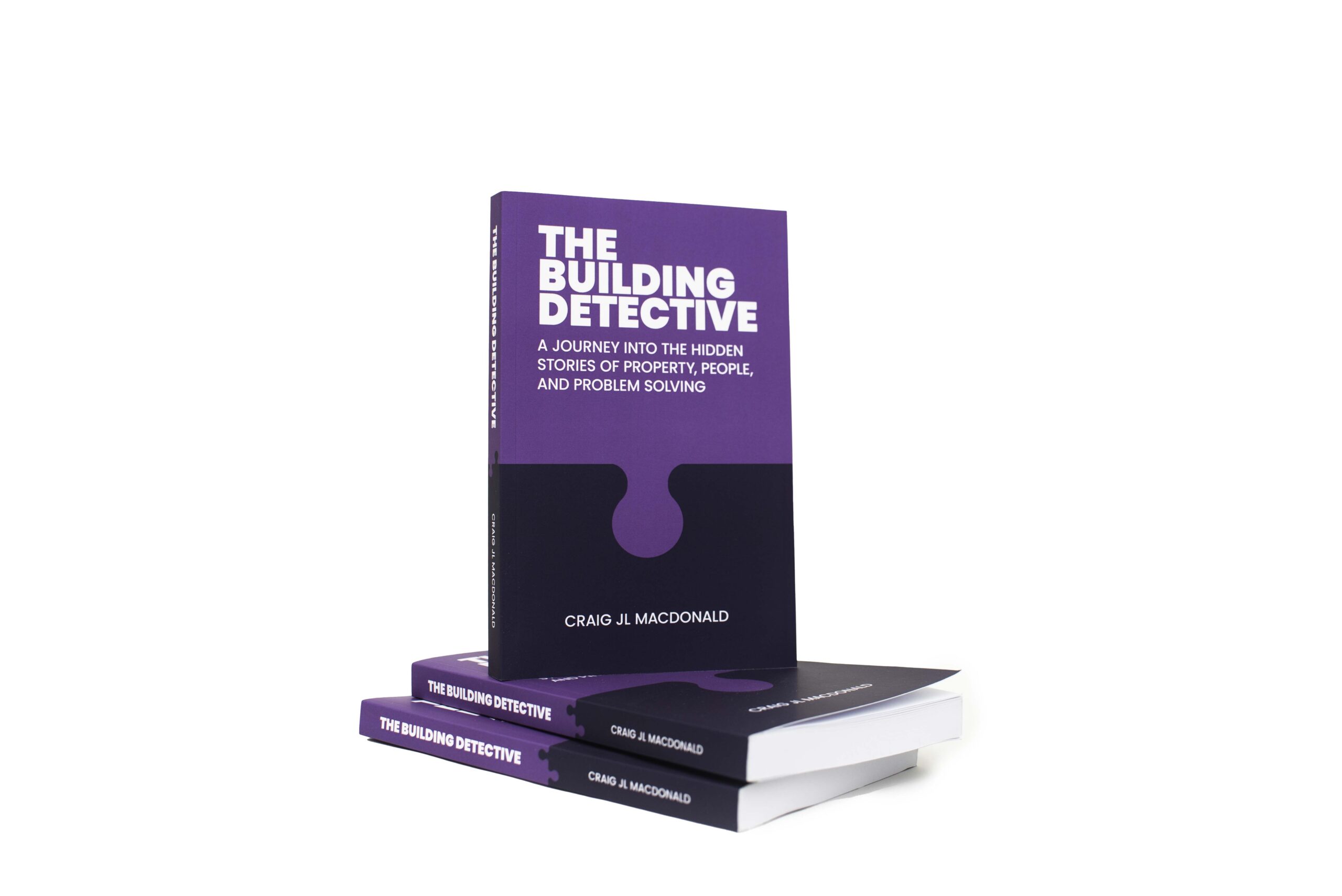
What you’ve just read are excerpts from a book called The Building Detective that I’ve been cradling and nurturing for the better part of a year. For a long while I wasn’t sure where it was going, but I kept going. Now here I am, seeing a path to the end, confident that this is real. I’ve never written a book before! I should really start telling people about it if I’m going to figure out what to do next. I’m absolutely going to need all the help I can get.
I’m thinking if you made it here, you might be someone that would like to support me, someone that is interested in such a book. You can learn more about the book at thebuildingdetective.com, and importantly for both of us, sign up for updates. I promise they won’t be frequent and spammy. Registering your interest will help me gauge my audience and help you know when and how you can get a copy.
The Grenfell story is one of a number of case studies illustrated throughout the book, which also examines: Mascot Towers, Sydney; Champlain Tower South, Florida; Opal Tower, Sydney; Ryan’s Bar, Edinburgh; and Notre Dame de Paris. I could not help but be moved in particular by the scale and events of Grenfell and the position that the disaster has left the survivors and bereaved families in. It opened my eyes to the human experiences of a kind of event that the news makes us numb to. This of course does not seek to diminish the hardship of any other event discussed in the book. Grenfell presented a case which demonstrated failure of professionalism and ethics at multiple layers of industries, institutions, and governance. It must result in the betterment of industry construction and maintenance practices, and not just stop at the control of non-compliant materials. Every single person affected was failed by the entire system. My ambition is that each time someone buys this book, a contribution will be made to an appropriate charity registered in England & Wales that is specific to supporting the people impacted by Grenfell, and positive projects arising from its outcomes.
Introducing, The Building Detective: A Journey into the Hidden World of Property, People and Problem Solving (Amazon)
[1] Grenfell Tower Inquiry Financial Report to 31 March 2023, https://www.grenfelltowerinquiry.org.uk/key-documents, 31 March 2023
[2] Document Disclosure https://www.grenfelltowerinquiry.org.uk/news/update-inquiry-3
[3] Inquiry Transcript, 20 November 2018, https://www.grenfelltowerinquiry.org.uk/hearings/expert-evidence-professor-torero
[4] Sir Moore-Bick, Martin. Grenfell Tower Inquiry Phase 1 Report Volume 3, October 2019
[5] The 9/11 Commission Report, 21 August 2004
[6] Inquiry Transcript, 20 June 2018, https://www.grenfelltowerinquiry.org.uk/hearings/expert-witness-presentations-1
[7] Conner, Rachel. Orpington fighfighter top ranked woman in London Fire Brigade. News Shopper. 16 February 2012, https://www.newsshopper.co.uk/news/9536512.orpington-fighfighter-top-ranked-woman-in-london-fire-brigade/
[8] Inquiry Transcript, 27 September 2018, https://www.grenfelltowerinquiry.org.uk/hearings/further-lfb-evidence-29
[9] Voss, Chris. Never Split the Difference: Negotiating As If Your Life Depended On It). HarperBusiness, 17 May 2016
[10] Inquiry Transcript, 27 September 2018, https://www.grenfelltowerinquiry.org.uk/hearings/expert-evidence-dr-glover
[11] Inquiry Transcript, 19 June 2018, https://www.grenfelltowerinquiry.org.uk/hearings/expert-witness-presentations-0
[12] Apps, Peter. Show Me The Bodies: How We Let Grenfell Happen. HarperBusiness, 10 November 2022