The practice of Technical Due Diligence (TDD) has, over time, devolved into a market commodity. There is a clear desire from clients to challenge the status quo, yet they find few alternatives. Previously dominant providers in the TDD space set a precedent for the format now widely adopted: reports segmented by discipline, culminating in an appended capital expenditure (capex) schedule. However, as these operations scaled, the intellectual rigour and bespoke value of these reports eroded.
Today, the majority of providers produce templated, generic documents that can fail to withstand scrutiny, reflecting a process-driven, assembly-line approach. Despite the market having become more sophisticated in the course of the last thirty years, understanding and delivering effective TDD remains a niche skill set. It is a discipline that is not formally taught in Australia, leading imported talent to rely heavily on templates that replicate past successes instead of fostering innovation. This approach reflects a scaling strategy that prioritises efficiency over quality in efforts to increase profit.
There is an assumption that client satisfaction is stable. The prevailing mindset of “if it isn’t broken, don’t fix it” has become a barrier to innovation.
Effective TDD isn’t correlated with scale of an operation. Every successful investigation is coordinated by a single lead consultant that is able to:
- understand the multi-disciplinary needs of the investigation and the inter-relationships between them;
- Reliably draw from a robust network of trusted professionals built over years of collaboration, each with track records of delivering the service; and
- Effectively coordinate and update stakeholders,
All while remaining relevant and bespoke to each unique investigation.
What follows is my TDD playbook which contains important considerations for todays TDD and considerations for the future. Feel free to read it in one, but I’ve structured it to be a reference that you can come back to for specific areas. You’re welcome to refer to each part as necessary.
Beyond Condition’s TDD Philosophy
Beyond Condition adopts a distinctly different approach. Our TDD services are guided by a deep engagement of the client’s unique context and strategic objectives. This ensures that every investigation is tailored and results in a bespoke, meaningful deliverable or advice.
The key principles of Beyond Condition’s TDD approach are:
- Clarity and Accessibility: Technical content is communicated in plain, concise language, ensuring it is accessible to diverse audiences. Achieving this simplicity requires a strong grasp of technical concepts. Being able to view an entire complex property in a holistic manner is a skill that is difficult to fast track over experience gained from years on the ground.
- Contextualised Risk: Risks are presented with appropriate context, avoiding oversimplifications such as traffic light charts (Red/Amber/Green a.k.a., RAG ratings) or generic high/medium/low ratings. While such ratings have a place, they must be defined in clear and specific language that is suitable for inclusion in investment or board reports.
- Material Focus in Capex: Items included in the capex schedule are limited to those that are material to the transaction. Routine maintenance and lifecycle planning items are excluded unless they represent immediate, backlog, or year-one risks related to operational functionality, workplace health and safety, or economic concerns.
- Key Insights Summary: Often referred to as a “heads up” or “red flag” email, this summary highlights risks that may impact negotiations or pricing. These key insights are carefully framed to foster critical and productive discussion with the vendor.
TDD is not a one-size-fits-all service. Instead, it should deliver insights that are actionable, relevant, and aligned with your strategic priorities. In some cases, a comprehensive report may not even be necessary. Depending on the context, the support of a trusted advisor during an inspection may be all that is required to provide clarity and empower decision-making.
Understanding the role of probabilistic language in TDD (and all building condition reporting)
Recent studies have delved into how individuals interpret probabilistic terms. For instance, a 2020 study examined how Dutch speakers, both laypeople and statisticians, understand probability phrases commonly used in news articles, revealing significant variability in interpretations. Additionally, a 2022 cross-language study investigated how people from different linguistic backgrounds verbalise probabilities in visual contexts, highlighting differences in expression and interpretation across languages. Furthermore, a 2023 study compared human interpretations of probabilistic phrases with those generated by GPT-4, finding that GPT-4’s estimates closely aligned with human participants’ assessments. These studies show the variability in interpreting probabilistic language and suggest that factors such as cultural and linguistic backgrounds can influence understanding.
For all of the buildings we report on, we have to build that context up first to ensure that there is no ambiguity that a shared understanding has formed. We do this using simple, clear language, not expressing platitudes such as “it was REALLY massive”, or “it was quite small”. These are subjective to individual interpretation and provide no benchmark for another’s understanding. We must acknowledge that the use of probabilistic language subject to variability of interpretation. For example, each report must clearly define “it’s possible”; “unlikely”; and “almost certain” to create a baseline for understanding between the author and the reader. This is where RAG ratings fail: people’s risk appetites and profiles are different from one another, and so a Red rating for one might be an Amber rating for another.
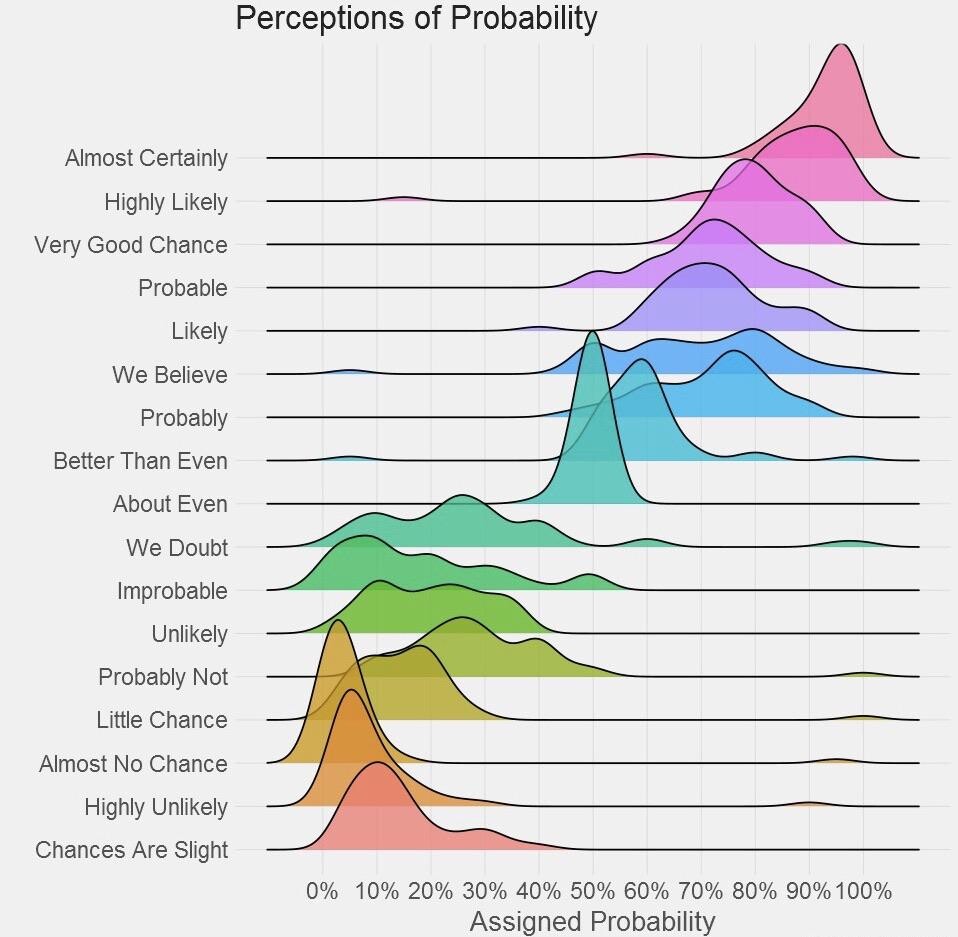
Ambiguous, subjective, or exaggerated language introduces significant professional risks. Misinterpretations can lead to disputes, misunderstandings, or even legal action if your report is open to varying interpretations. Clear, precise language ensures that findings are understood as intended and protects both parties from unnecessary complications.
We’ve developed a way to not just mitigate this risk, but to provide bespoke value to the specific audience the report has been prepared for. Beyond Condition build in a client touch point (right here) for us to guide them in fine tuning risk scoring to reflect their own risk appetite and internal controls. This way, by the time the detail has filtered through to the investment paper or board report, those managers can have 100% confidence in communicating risk levels.
Resilience and the Changing Landscape of TDD
We’re building stock to last a century, so we need to think generationally rather than just about climate change. This kind of foresight will become increasingly necessary as we face new challenges. For example, electrifying buildings by replacing old chillers and gas boilers with electric systems is a great but what happens if the refrigerants used become environmentally unacceptable? We need to consider the long-term viability of our investments, balancing the risks and upsides.
In TDD, understanding frameworks like NABERS and Green Star, BREEAM, LEED, and the need to coordinate specialists for climate risk assessments, is increasing. Although I’m sure it existed prior, climate risk assessments began to feature more prevalently in my technical due diligence work from around 2018 onwards.
Representative Concentration Pathways (RCPs) provide critical insights into the potential future impacts of climate change by describing different trajectories of greenhouse gas (GHG) concentrations. These scenarios model changes in temperature, precipitation, sea level rise, and extreme weather events.
- RCP 8.5 represents a high-emissions “business-as-usual” pathway, commonly used for worst-case scenario modelling.
- RCP 4.5, by contrast, reflects a more sustainable trajectory, assuming moderate action to mitigate emissions.
RCPs are scenarios that describe different trajectories of greenhouse gas (GHG) concentrations and their potential impacts on global climate. They are used to model potential changes in temperature, precipitation, sea level rise, and extreme weather events under different GHG concentration scenarios. For example, RCP 8.5 is considered a high emissions pathway, sometimes referred to as ‘business as usual’. Meanwhile an RCP of 4.5 represents a pathway that involves humanity taking “moderate action” to mitigate GHG gas emission. These considerations become especially relevant to those buying property located at coastal locations (which nearly all of Australia’s built environment is) since increased temperature and humidity can promote and accelerate the corrosion of steel. You thought I was going to say rising sea level risk, didn’t you? There are many factors to consider.
The RCP results contribute to risk assessments used in connection with the performance capacity of the building’s current assets. For example, if the average number of 40°C days per year increases from three to more than ten, will the building’s air conditioning services hold conditions on those extremely hot days or will it fail? If there is a BMS, then it can be queried for this historic performance data. Hey presto, you’ve got way more credibility beyond relying on the manufacturer’s recommended service life to determine a basic lifecycle replacement year. You’ve predicted more precisely when the system needs to be replaced and with what capacity. It’s an environmental issue because you have an opportunity to change to something more energy efficient and therefore less CO2 producing and bolstering your green framework creds to boot. At the same time though, increased efficiency also means saving money, not just operationally present day, but significantly contributing to the protection of the investment well into the future, backed by due diligence with rigour. Put that into your investment product disclosure statement.
Why we should care about how TDD fits into the PDS
The Financial Stability Board is an international body that monitors and makes recommendations about the global financial system. It was established in the 2009 G20 Pittsburgh Summit as a successor to the Financial Stability Forum (FSF). The Board includes all G20 major economies, FSF members, and the European Commission. The Board created the taskforce for climate related financial disclosure (TCFD) who in 2017 released recommendations on the types of information that companies should disclose to support investors, lenders, and insurance underwriters in appropriately assessing and pricing a risks specifically related to climate change. Since TCFD began its work, there has been a significant increase in demand from investors for improved climate-related financial disclosures. By 2023, TCFD issued its sixth and final report before disbanding. It is their recommendations that provide a foundation to improve investors’ and others’ ability to appropriately assess and price climate-related risk and opportunities. Product disclosure statements that demonstrate accordance in line with TCFD recommendations is now considered best practice.
This rigorous approach enables more accurate lifecycle planning, supporting timely upgrades that enhance energy efficiency, reduce carbon footprints, and improve alignment with green building frameworks. The operational benefits are clear: lower costs today and a more resilient asset tomorrow, safeguarded by due diligence that combines technical expertise with practical foresight.
TDD in ESG
Environmental, Social, and Governance (ESG) considerations are no longer a niche concern. They are fundamental to how assets are valued, financed, and perceived in the market.
- Green Ratings vs. Real Performance – A NABERS or Green Star rating is useful, but it’s not a guarantee of future resilience. What happens when climate conditions shift beyond the design assumptions?
- Embodied Carbon and Capital Planning – In the past, lifecycle costs focused on replacing plant and materials at the end of their useful life. Now, investors ask: What’s the embodied carbon cost of that decision? Should an HVAC system be replaced or retrofitted for greater efficiency?
- Stranded Asset Risk – Buildings that fail to meet evolving sustainability expectations may find themselves difficult to lease or sell. Does an asset have the adaptability to remain viable in 10, 20, or 30 years?
A Technical Due Diligence report in 2025 is not the same as one written in 2015. The most useful reports today are forward-looking, assessing not just current compliance but future viability.
Beyond Capex: Identifying Operational and Market Risks
Traditional TDD frameworks focus on physical condition and capital expenditure. But the reality is, the biggest risks in commercial real estate aren’t always physical.
- Cybersecurity in Building Management Systems (BMS) – A BMS is the nervous system of a modern building. But is it secure? A recent cyberattack on a global property owner forced the manual operation of entire portfolios. Due diligence should address not just what’s broken, but what’s vulnerable.
- Regulatory Change and Hidden Costs – When new building regulations are introduced, existing assets may suddenly carry unexpected upgrade liabilities. Recent examples include cladding rectification schemes and accessibility compliance. A well-executed TDD doesn’t just flag current non-compliance, it anticipates what’s coming.
- Tenant and Market Dynamics – A shopping centre, office tower, or industrial site isn’t just a building, it’s a business. Is the building still fit for purpose? Is it positioned to attract and retain tenants in a shifting market?
TDD should do more than confirm an asset’s condition; it should clarify its future competitiveness.
The Role of AI and Data in the Next Generation of TDD
One of the biggest shifts in due diligence is the use of AI-driven intelligence to enhance decision-making.
- Automated Document Review – AI can now ingest and analyse thousands of pages of leases, reports, and planning documents in minutes, surfacing key risks and missing information instantly.
- Real-Time Climate and Risk Modelling – The ability to overlay climate projections, insurance trends, and regulatory shifts onto due diligence findings is transforming how investors assess risk.
- Predictive Maintenance Insights – By integrating sensor data and past performance trends, TDD reports could soon predict when and where failures are likely to occur.
To get ahead of this, Beyond Condition is building Hypatia. The most valuable TDD providers will be those who combine deep technical understanding with cutting-edge data insights. The most proactive transaction analysts will quickly complete 70% of the TDD review themselves and engage a consultant team with a highly targeted scope to get the comfort they need on the 30% balance.
The Future of TDD Is Strategic
Technical Due Diligence has evolved from a transactional necessity to a strategic advantage.
Investors who still see TDD as a box-checking exercise will be left behind. Those who leverage it as a forward-looking tool will stay ahead of the curve.
Due diligence should be more than a report, it should be a roadmap. A way to not just identify risk but to shape better investment decisions.
Because in a rapidly changing world, understanding the past is important. But seeing the future? That’s where real value lies.
CJLM