“What does maturity in asset management look like?”
As someone who spends most of their time in and around physical assets, inspecting them, identifying failures, and translating condition into plain-English reporting, I’ve always been deeply practical. My work is usually downstream of the big strategic decisions. But increasingly, I’m working with consultants, engineers, and government teams who are operating at that higher level: building business cases, prioritising portfolios, and advising decision makers on what to fund next.
It wasn’t until my time in KPMG Australia‘s Engineering and Asset Management division, working alongside dedicated asset managers, many of whom are regulars at AMPEAK and active members of Asset Management Council, that I really began to appreciate the sophistication of this world. Their goals were bigger than compliance or maintenance plans. They were trying to create clarity, defensibility, and value across massive portfolios. They were the instigators of asset management maturity for many organisations.
That’s where ISO 55001 enters the picture.
It’s not just a standard. It’s a system for thinking clearly and consistently about value, especially in organisations responsible for thousands of assets and finite budgets. It’s a framework for understanding what you own, how it’s performing, what risks you’re carrying, and what interventions are worth the cost, not just today, but over a 30-year horizon.
In short, it’s the bridge between operational reality and strategic decision-making. And those of us on the ground, I call us the “data collectors”, have a bigger role to play in supporting it than we often realise.
ISO 55001 and the Big Picture: Why Maturity Matters
For asset-heavy organisations like state governments, transport agencies, universities, defence, and mining operations, uncertainty is expensive. The less you know about the condition and performance of your assets, the harder it is to:
- Budget for upgrades or replacements
- Justify funding to Treasury or shareholders
- Minimise unplanned outages
- Keep operations running smoothly while staying compliant
- Plan long-term without lurching from crisis to crisis
That’s where ISO 55001 comes in. It provides a structured management system for assets, aligning technical data, financial risk, lifecycle planning, and governance into a single model. It doesn’t tell you what to do, but it ensures you have the processes, principles, and information needed to make better decisions, consistently.
It’s also globally recognised, which matters for internal assurance, external audits, and any organisation competing for funding or policy attention. Whether you’re running a $500 million hospital portfolio or maintaining stormwater assets across a shire, maturity in asset management makes you credible.
That’s the part I didn’t fully appreciate until I was in the trenches with those asset managers. And once you see it, you realise something else:
None of this maturity is possible without decent field data.
To get a sense of the scale and criticality we’re talking about, take South Bank Corporation as an example. Located in the heart of Brisbane’s CBD, this 42-hectare precinct welcomes over 14 million visitors a year and manages nearly $934 million in physical built and building services assets. It includes public parklands, cultural infrastructure, 62 retail tenancies, and the Brisbane Convention & Exhibition Centre, which alone hosted 875 events and over 700,000 delegates in 2022. As of August 2023, full responsibility for asset management and operations returned to the Corporation. Imagine just how vital it is to have reliable, structured, site-level data to support ongoing renewal, funding bids, and long-term strategic planning. You can read their 2023–24 Annual Report here.

Where we Fit In (And Where we Don’t)
We’re not a management consultants. We don’t design maturity models. We don’t run ISO workshops or write asset strategies. But I do know, however, how hard it is for those people, the consultants, engineers, and asset managers building those strategies, to get the consistent, reliable site-level data they need to support them.
Whether they’re working with government portfolios, universities, utilities, or mining infrastructure, the problem is usually the same:
“We know what we need to know, but we don’t have the people, time, or systems to go out and actually collect it.”
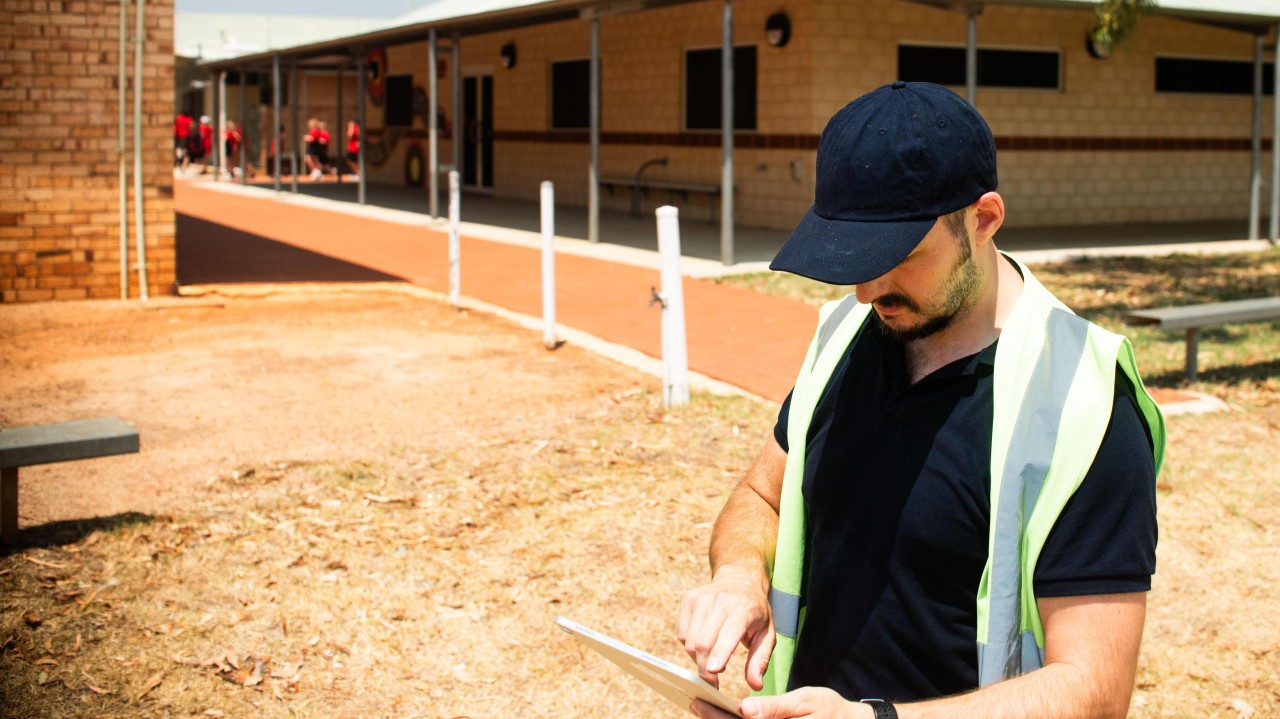
We specialise in physically going to site, capturing the asset data you need, and delivering it back in the exact format your model or report requires.
You can’t plan for the future of your assets if you don’t have a reliable picture of what’s happening on the ground today. And we give you that data in a way that remains flexible and adaptable.
For Consultants Helping Clients Mature
If you’re a consultant helping a client align to ISO 55001, whether through a full AM strategy, lifecycle modelling, or risk-based investment planning, Beyond Condition can support your delivery in two ways:
- Equip your own field teams with a structured, repeatable method to streamline the collection of condition and inventory data across hundreds of assets
- Act as your field partner, a trusted, insurable, experienced team that does the legwork so you can focus on analysis, modelling, and decision-making – you are the strategy advice layer, whilst we remain the data capture layer.
One of the things that stops clients from doing proper asset regos is cost. It’s perceived to be extremely expensive to use even the cheapest people to walk around and collect data at such scales. We address that with our tech platform and streamlined inspection methodology. We’re here to fill the data gap that so often derails timelines, inflates budgets, or compromises quality.
CJLM